
In the 1930s, hospital births were becoming more common in the US, for example, in Chicago in 1930, 55% of births took place in a hospital. It’s likely more would have chosen a hospital birth if they could afford it, or weren’t prevented due to segregation. For efficiency, hospitals used nurseries to care for newborns while their mothers recovered over the course of a week or more. With a bunch of newborns together in a nursery, patient id became a serious concern– especially following high profile mix ups.
Linen Tags
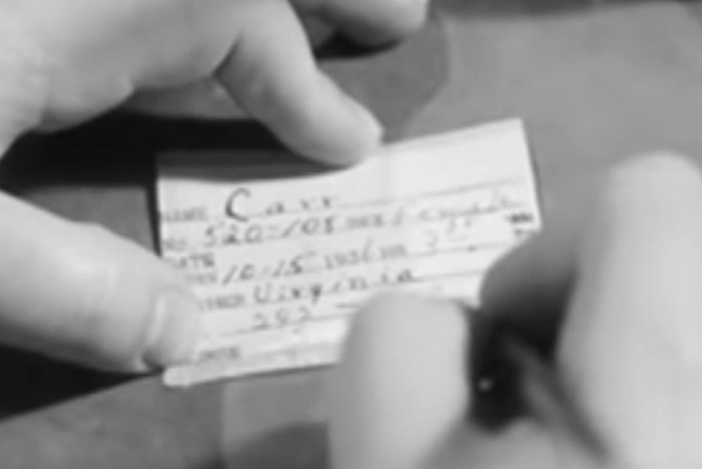
A common method used was linen labels, which were manually filled out and then adhered to the newborn’s chest, but sometimes the labels didn’t stay stuck.

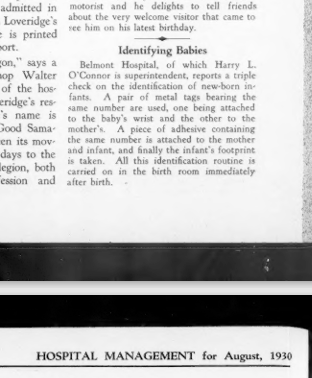
Matching Metal Tags
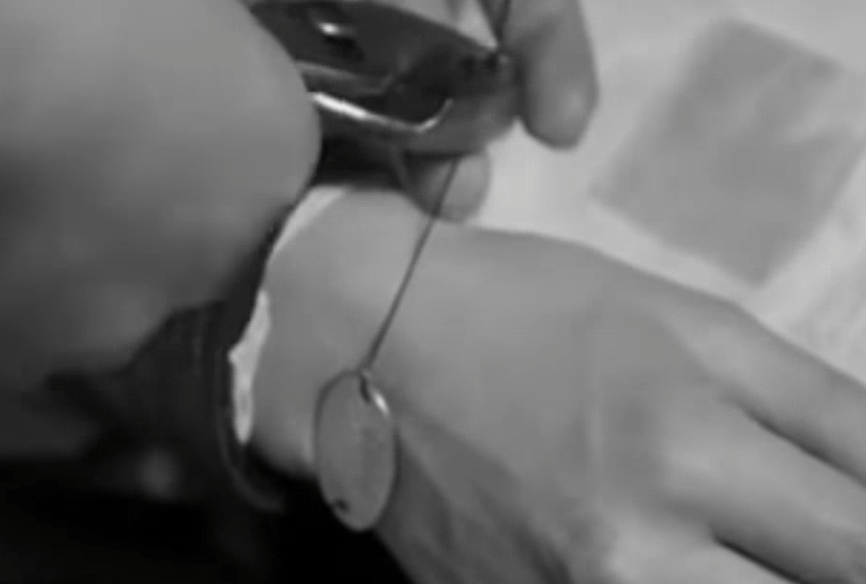
Another option was the use of matching pendants on a bracelet for mom and a necklace for baby, made of lead to be soft and flexible but strong and water proof.
Hand and Footprints
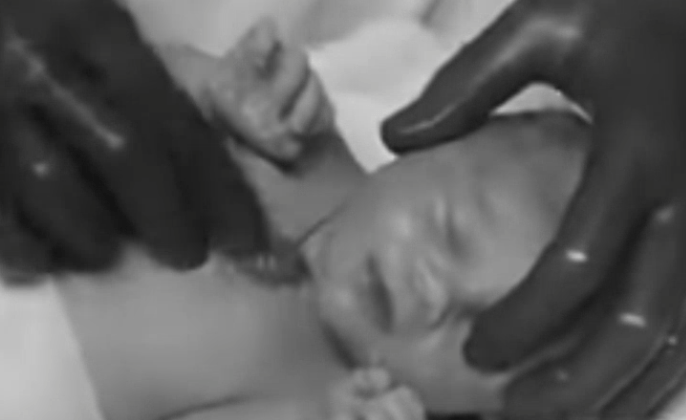
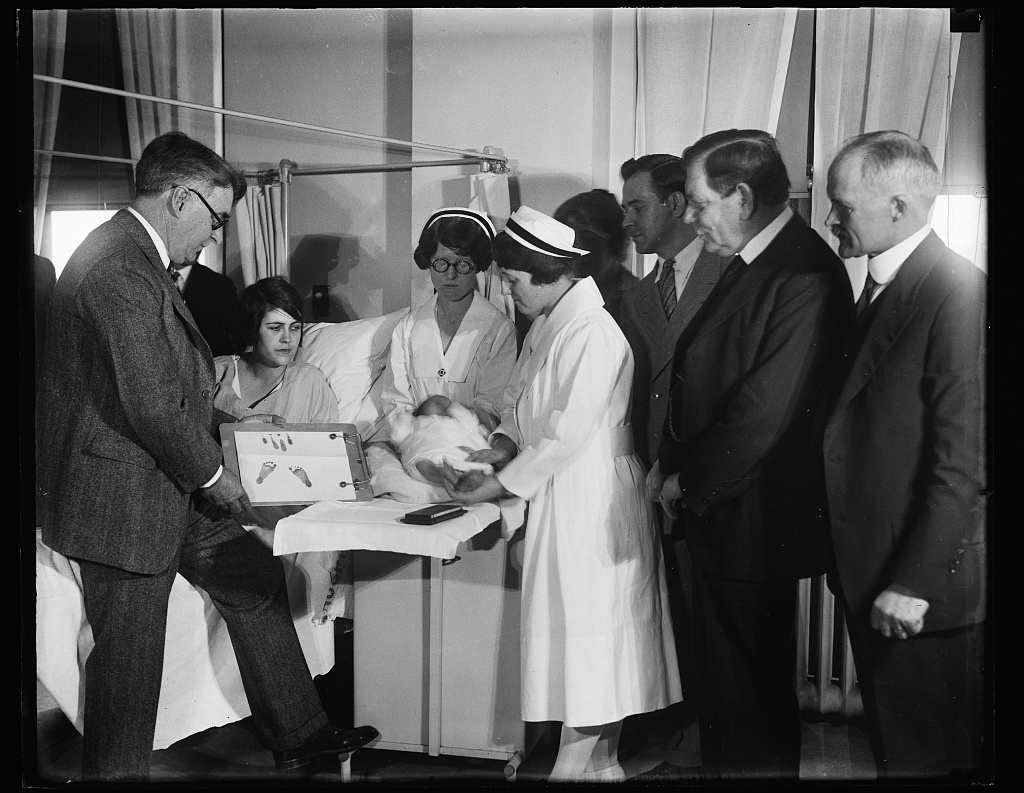
With a nod to forensic science, the idea of getting mother and baby hand or foot prints was introduced in the late 1920s but many mothers didn’t like the idea due to the association with criminality. Its interesting to see how quickly attitudes shifted to cherishing baby’s hand or foot prints.
UV Branding
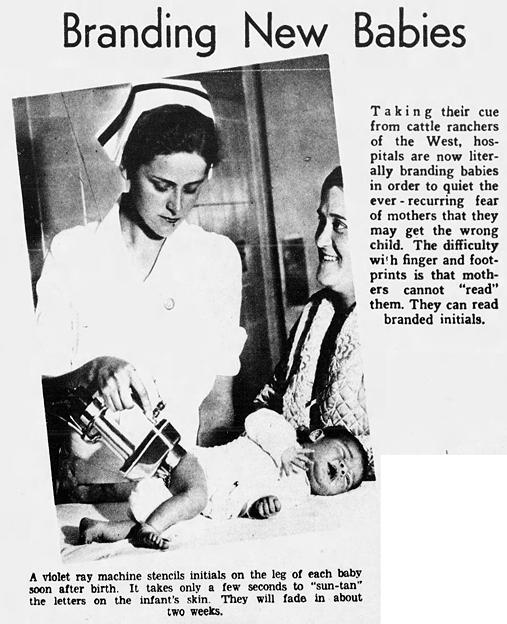
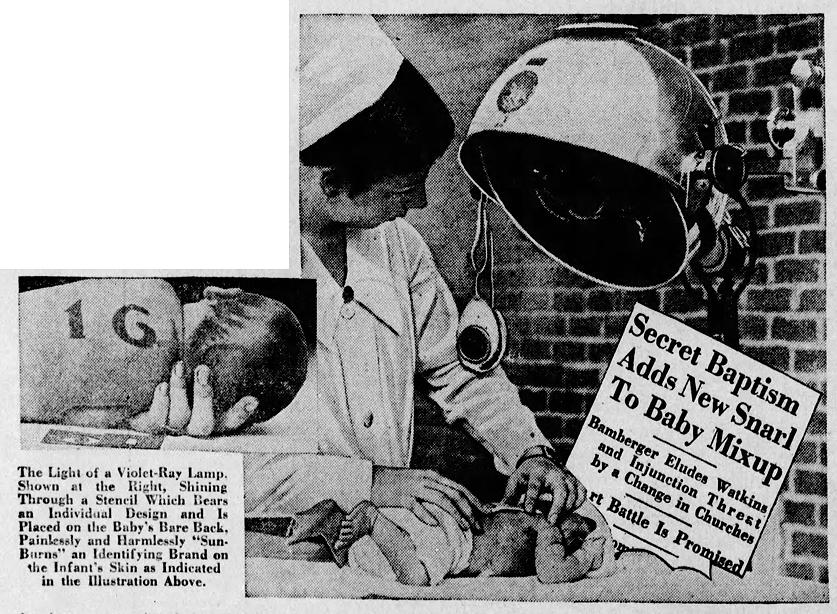
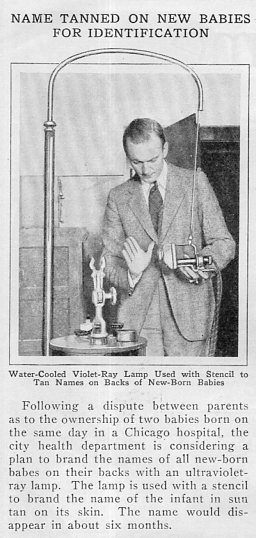
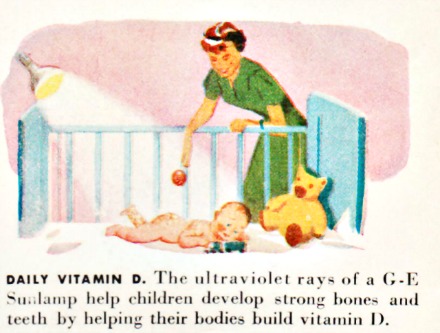
Other ideas included branding newborns’ initials with UV light {similar to how ranchers branded their cattle) sometimes called the “stencil method.” This was during an era where medical consensus was that UV light was healthy for babies, advice included leaving naked infants outside in full sun for hours a day, or in less favorable climates, to attach sun lamps to cribs so they would make more vitamin D and prevent rickets. However, recent studies show that no amount of sun exposure can remedy a lack of dietary vitamin D, and there’s no safe amount of UV exposure from the sun, especially for babies.

Many hospitals used multiple methods at the same time as fail safes.
Today the plastic bracelet system and rooming-in prevails, plus hospital stays are much shorter. In addition, we have higher tech security measures, including security badges, trackers, and of course, security cameras. Yet, even today, babies are sometimes mixed up, with a case in the UK last year, but unlike a century ago, if a mix up is suspected we have reliable tests to determine parentage unlike in the infamous Great Chicago Baby Mix-Up.
Sources:
Andrews, Charlotte and Galye Dimitrova. 17 April 24. “Poole Hospital admits baby handed to wrong mother.” BBC.
Lynne Curry. “Birthing Practices.” Encyclopedia of Chicago.
Envisioning the American Dream (blog with magazine and newspaper archive).
Jindal, Ankur K., Aman Gupta, Keshavamurthy Vinay, Anuradha Bishnoi. Jan 2020. “Sun Exposure in Children: Balancing the Benefits and Harms.” Indian Dermatology Online, 11(1): p94-94. PMC
Historic Films, archival footage.
Library of Congress.
Newspaper Archive.
Popular Mechanics, October 1930.
 The Baby Historian