


Due to the clingy neo-classical fashions of the 1790s-1810s, for the first time in hundreds of years natural feminine figures were on public display. The change in fashions, within a generation, was dramatic especially in France.
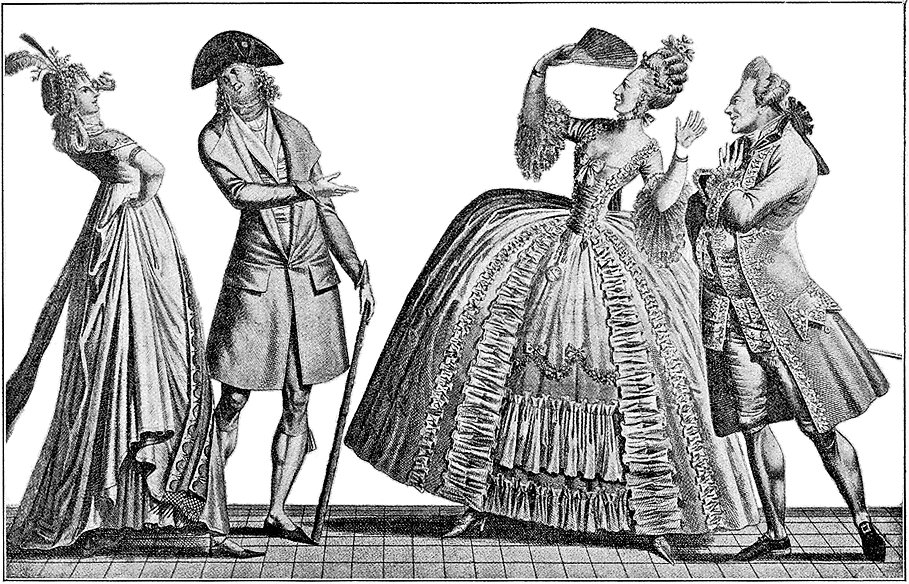
The empire waist emphasized the size of the belly making it difficult to hide excess body weight– or a pregnancy. We know from letters and novels of the era that women of fashion remained socially active up until (and even during) labor. And since married women routinely had annual rounds of pregnancy, the result was regularly seeing baby bumps in public without the disguise of panniers, hoops, or cleverly constructed stays.
So a new trend for belly pads was mighty suspicious:

In 1793, in England, Lady Charlotte Campbell (pictured above, center figure in white) started a trend for belly pads after returning from a continental tour in which she saw classical statues first hand. She and the fashionable lemmings who imitated her believed they looked like those classical statues.

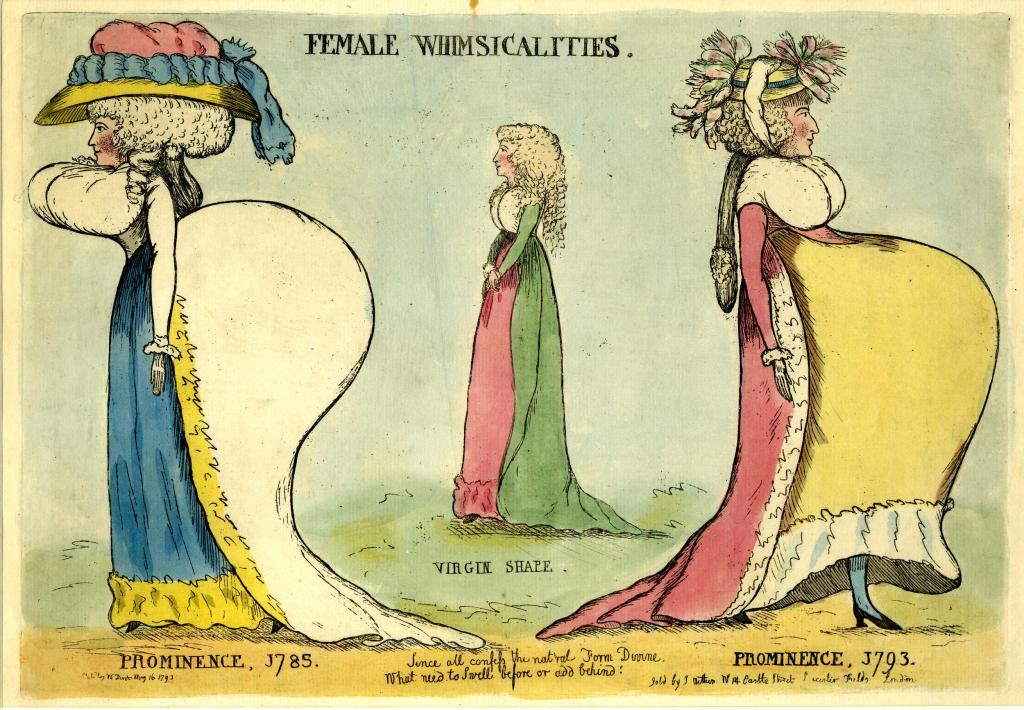
But to everyone else, to quote the poets:
You pride yourself much my dear BETTY PAD,
And thus say to me, now forsaken and sad:
‘That you’re all the fashion, and I in the dumps,
Cause ladies no longer put on their FALSE RUMPS.’
The fact I allow—but pray Betty, mind,
You’re only BEFORE, that which I was BEHIND;
A horse-hair protuberance made up by folly,
Now wore from my Lady, to mopsqueezing Molly;
A projection much better, behind than before
Because it make virgins now look like a —–.Epistle from Mrs Bustle to Mrs. Pad
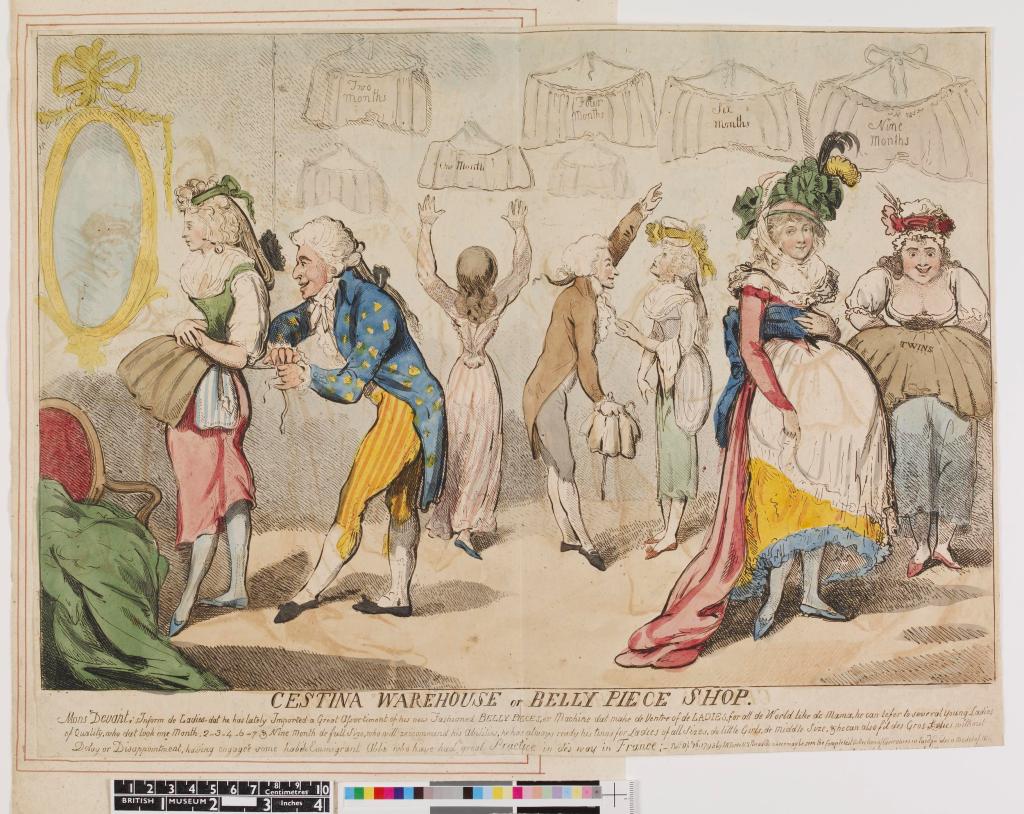
Cestina Warehouse or the Belly Piece Shop. British Museum.
In The Sun, a shopkeeper said a young lady asked for a belly pad, of about six months, Gilray went further, including twin sizes. There were jokes about how costly the pads were when a lady could get a big belly for free.

One of the names for the pad, faux pas, was also a term for an out of wedlock pregnancy:
The Pads, the Pads, so artfully protect ‘em…
As her waist swells, the Pad is smaller shewn,
And as months glide, it more becomes her own,
Till (O! what fame and glory do await her)
What first was fashion soon is simple Nature.-A Friend to the Sex
It is unknown if anyone seized on the trend to conceal a pregnancy, but it barely outlasted one, disappearing after 1794.
Sources:
British Museum.
Rauser, Amelia. Spring 2017. “Vitalist Statues and the Belly Pad of 1793,” Journal18, Issue 3 Lifelike. 10.30610/3.2017.2
 The Baby Historian